Internet Anthropologist Think Tank

  • Search our BLOG


  • HOME
    Terrorist Names SEARCH:
    Loading

    Sunday, October 12, 2008

    How serious is the Economic problem

    How serious is the Economic problem.
    By Gerald: Internet Anthropologist Think Tank
    Oct 12, 08

    Its worse than the Government lets on.
    They are throwing everything they have at the problem.
    Lets take a quicK review.

    Bailouts some where around $900,000,000,000
    $900 billion. And the libalities of Freddie and Frannie,
    which are NOT on the books.

    What has the fed done?
    Here's a scorecard of what the Fed has done:
    Federal funds rate: The Fed has lowered its target rate by 325 basis points from 5.25% to 2%. The fed funds rate is the rate banks charge each other for overnight loans to meet reserve requirements. The Fed can influence the rate by injecting or withdrawing money from the system via sales or purchases of Treasurys.
    Repurchase agreements: The Fed flooded the financial system with $105 billion in cash on Thursday. The repurchase agreements allow primary dealers to sell Treasury bills, notes and bonds to the Fed on a temporary basis, and then repurchase them at the maturity of the agreement, either the next day or up to several weeks later. Reverse repos work just the opposite, with the Fed draining money from the system by temporarily buying Treasurys. By managing the daily money supply through repurchase agreements and reverse repos, the Fed's Open Market Desk can keep the federal funds rate near its target
    Discount rate: Lowered by 400 basis points from 6.25% to 2.25% and extended the term from overnight to 90 days. As of Wednesday, banks had $33.4 billion in outstanding loans through the discount window. The discount rate is the rate the Fed charges banks for overnight loans from the Fed's discount window to meet reserve requirements. The Fed has tried to remove any stigma attached to borrowing from the discount window.
    Primary Credit Dealer Facility: The Fed has opened up the discount window to primary dealers (including broker-dealers and investment banks) at similar terms and rates. As of Wednesday, the investment banks and dealers had $59.8 billion in outstanding loans, compared with none the week before. The loans are likely to help Lehman Bros. liquidate its assets, analysts said.
    Term Auction Facility: The Fed has auctioned $150 billion in 28-day or 84-day loans of cash to commercial (depository) banks" in generally sound financial condition." The loans are fully collateralized by bonds, equities, asset-backed securities or commercial paper.
    Term Securities Lending Facility: The Fed has auctioned $117.2 billion as of Wednesday in 28-dayloans of government securities to primary dealers (including broker-dealers and investment banks), including $50 billion in options. The loans are fully collateralized by bonds, equities, asset-backed securities or commercial paper.
    Security Lending: On Thursday, the Fed auctioned $17.4 billion of government securities on an overnight basis to primary dealers, fully backed by collateral. The auctions take place daily. On Monday, $28.5 billion was auctioned. For the week, the securitiesloans averaged $8.4 billion per day.
    Foreign currency swaps: The Fed has offered to swap up to $247 billion in dollars against other currencies from other central banks that can then be auctioned into the markets, typically on an overnight or two-week maturity. As of Thursday, $88 billion in loanswere outstanding at the central banks.
    Bear Stearns: The Fed has taken on about $30 billion of Bear Stearns' assets as part of the fire-sale to JP Morgan. As of Sept. 17, the Fed's portfolio of former Bear Stearns assets was worth $29.4 billion.
    American International Group: The Fed has offered to lend AIG up to $85 billion in exchange for a majority stake in the company. As of Wednesday, AIG had borrowed $28 billion.
    Supplementary Financing Program: To boost the Fed's balance sheet, the Treasury announced it would hold special auctions of Treasury bills for the Fed's account. On Wednesday and Thursday, the Treasury auctioned $100 billion of short-term bills.
    Fannie Mae and Freddie Mac: The Treasury has seized control of Fannie Mae and Freddie Mac and has taken an equity stake in the companies. The impact of the seizure on the government's books has not been quantified

    XXXXXXXXXXXXXXXXXXXXXXXXXXXXXXXXXXXXXXXXXXXXXXXXXXXXXXX
    Whats hapening NOW?

    Two major rescue plans for the banking and financial systems by the US and UK have fallen short of luring fleeing investors back to the markets. In seven black days, crashing global indexes led by Wall Street - which tumbled 18 percent and London by 21 percent - followed by Asia, wiped $4.5 trillion off share values world wide. In the UK, it was calculated that one person goes bankrupt every five minutes. Iceland’s entire economy is bankrupt.

    The plan on the G7’s table is essentially to partially nationalize almost half of the Western banking system by buying up stakes in troubled banks or shoring up the banking system as a whole.

    In their statement Saturday, the G7 said that they were working on a rescue package tailored for each country within a common framework that would include recapitalizing banks, ensuring strong deposit insurance to protect savers and restarting frozen credit and mortgage markets.


    This weekend sees make-or-break efforts by Western finance ministers and international financial institutions to produce a plan that will drag their economies back into equilibrium before the world’s markets open Monday, Oct. 13. They are working to the dread drumbeats of turmoil, panicky investors and looming recession, which some economists predict will be more disastrous than the 1930s slump which led to World War II.


    The plan on the G7’s table is essentially to partially nationalize almost half of the Western banking system by buying up stakes in troubled banks or shoring up the banking system as a whole.

    In their statement Saturday, the G7 said that they were working on a rescue package tailored for each country within a common framework that would include recapitalizing banks, ensuring strong deposit insurance to protect savers and restarting frozen credit and mortgage markets.


    The partial nationalization of banks in the US and Europe breaks with the rules of the free market, of which the United States is the global epitome - a major factor in its superpower status. While Asia ( READ CHINA ) has prospered by embracing free-market practices, resentment is deepening over its shortcomings for which the US is blamed.

    The only Western leader to address this problem head-on was Italian prime minister Silvio Berlusconi. At a government session in Rome, Oct. 10, he revealed: “The idea of suspending the markets for the time it takes to rewrite new rules is being discussed.” Berlusconi added: “They can’t just be for one country, or even just for Europe, but global.”

    This remark was quickly retracted after a phone call from the White House in Washington, according to our sources, because it opens up the even more problematic question of who is competent to lead the rewriting of the rules. However, the IMF, high priest of the gospel that the market knows best, has already turned around and is calling for more international regulation and oversight on global finance, a further retreat from its basic tenets.


    SOURCE:


    The Future?


    Its not good they are straying away from a free market system, and thats going to bite them in the ass. They are in no-mans land. What they are playing with is sacred in the capitalist system, in capitalism its a major mortal sin.

    It might not be a bad Idea to have 3 mos of cash ON HAND.

    And 3 months of food etc on hand.


    A free market system re-balances its self, some times it takes a depression, but it will rebalance. I don't know what a Governement owned system will do. They are basicly saying they the Governments have enough money to control the markets.


    I don't think they do, our paradigm points to mega inflation, and money shortages.

    Even OPEC has join the effort to stave off a world wide economic colaspe.

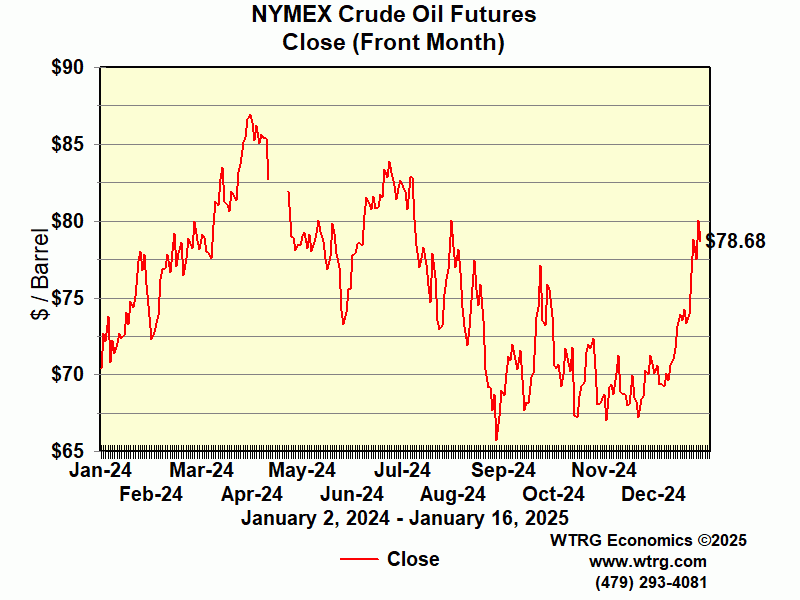
    Oil prices have dropped 50% in the past 3 months from a high of $145 bbl. to $77 bbl. on Oct 10, 08. Lack of demand and cash flow problems.
    Enlarge

    Make sure your seat belt is fastened.


    Gerald

    Update:

    Top policymakers from the Group of 20 largest economies were meeting later Saturday to work on a coordinated response to calm markets that have been shaken by massive losses and bankruptcies. The Group of Seven includes the United States, Japan, Germany, France, Italy, the United Kingdom and Canada. The European Union is also a participant. The G20 includes those eight and adds China, Brazil, Russia, India, Mexico, South Korea, Saudi Arabia, Argentina, Australia, Indonesia, South Africa and Turkey. Together, the G20 account for about 90% of global gross domestic product


    Leaders of the 15 euro-zone countries will meet in Paris on Sunday to discuss a rescue plan based on the British model, which includes massive recapitalization and an explicit guarantee of all interbank credits, as urged by the IMF, U.K. Prime Minister Gordon Brown and many outside experts.

    Although the talks in Washington this weekend haven't come up with the specific solutions needed for each nation, the whole world is committed to do whatever it takes to unfreeze credit markets, said Dominique Strauss-Kahn, the IMF's managing director.

    SOURCE:

    NO DETAILS FORTH COMING, AND THATS WHAT THE MARKETS NEED TO CALM THE JITTERS.

    DETAILS OF THE PLANS.

    g

    OUR RELATED POSTS:

    .ECONOMIC TERRORISM

    recession...CHINAS CASH SURLPUS

    WORLD BANK UNDER CYBER SIEGE

    .US banks leading way to world DEPRESSION

    "World Economic Crash"


    Reblog this post [with Zemanta]

    Labels: ,

    Terrorist Names SEARCH:
    Loading

    Thursday, September 18, 2008

    World economic crash

    Link: Global Guerrillas: FINANCIAL MELTDOWN.

    FINANCIAL MELTDOWN

    "As anticipated, the global financial system is now in free-fall. The bankruptcy of Lehman, the government take-over of Fannie/Freddie (essentially, a gov't takeover of the entire US mortgage market), the fire sale of Merrill Lynch (moments before it too went into free-fall), the expansion of Federal Reserve emergency lending into securities (which codifies its position as the only source of capital for big financial firms), the looming failure of AIG (the world's biggest insurance company), the impending failure of Washington Mutual (which will deplete the entire FDIC fund in one whack) all point to tougher times ahead.

    The easily foreseen failure in the US/UK mortgage markets due to rampant corruption has now developed into a financial black swan that due to entanglements (connectivity), opacity, size, speed, and complexity is beyond the capacity of the US (and its allies) to control. It will get worse as the run on the massive (30 times larger than the US economy) shadow banking system begins in earnest.

    To many, this developing situation will be uncharted territory. However, for those of us that have already embraced the trend lines, the roadmap for the next decade is increasingly clear.... (((And, no, you don't even wanna look. But you kinda have to.)))


    xxxxxxxxxxxxxxxxxxxxxxxxxxxxxxxxxxxxxxxxxxxxxxxxxxxxxx

    Russia:

    (Editor's note: Since this interview was conducted and posted, trading was suspended on Moscow's stock exchange amid sharp declines and furious efforts to boost Russia's banking sector.), Sept 18,08

    RFE/RL: Writing in "The Moscow Times," you said on August 8 that Russian Prime Minister Vladimir Putin "made his greatest strategic blunder" and single-handedly "wiped out a half a trillion dollars of stock market value, stalled all domestic reforms, and isolated Russia from the outside world." Explain that stock-market loss part.

    Anders Aslund: Well, what happens when you start an aggressive foreign policy is that you also start an aggressive foreign trade policy. And you block domestic economic reforms. And you sharply increase the political risk in your country. And UBS [United Bank of Switzerland] has assessed that this increase in the political risk means that stock prices should be 20 percent lower -- that's $300 billion right off there, off the stock market. The bond yields that are demanded now for loans to Russia are 2-3 percent higher than a month ago.

    RFE/RL: You also write that, despite what happened in Georgia, the Russian economy has been headed for a slowdown for some time. Why?

    Aslund: Well, it's at the end of a business cycle, the oil price has fallen by one-third, and the Russia economy suffers from massive overheating. So that's the time when you really need reform, and then Putin is turning his back on it.

    RFE/RL: Russia has made it an official goal to reach half the U.S. per capita GDP by 2020. You don't think this is going to happen. Why not?

    Aslund: I would say that I think that the most important [factor] is the combination of massive corruption and [the] inability to build infrastructure when the need is at its greatest. Russia today can't build motorways; they can't build pipelines. And they need some of them very badly. The traffic chaos in Moscow is just characteristic of the main problem in Russia today...

    SOURCE:Permalink

    XXXXXXXXXXXXXXXXXXXXXXXXXXXXXXXXX

    A wave of bittersweet melancholy has descended on the thousands of phishers, hackers and credit card swindlers inhabiting the computer crime supersite DarkMarket.ws. On Tuesday the site's operator, known as Master Splyntr, announced that he was shuttering the forum, which has hummed along for nearly three years as a premier vehicle of criminal commerce.

    "[R]ecent events have proven that even in our best efforts to expel and deactivate the accounts of suspected LE [law enforcement], reporters, and security agents, it is obvious that we haven't been entirely successful," Splyntr wrote in a message on the site.

    Chief among those recent events is last week's arrest of Cha0, a Turkish hacker -- and alleged kidnapper -- who served as one of DarkMarket's administrators. Cha0 was known for selling high-quality ATM-skimming hardware that crooks could affix to cash machines to grab debit card swipes and PINs. Turkish police arrested Cha0 on Friday, identifying him as one Cagatay Evyapan.

    Permalink

    xxxxxxxxxxxxxxxxxxxxxxxxxxxxxxxxxxxx

    Iran 25% inflation rate Iran inflation crushing, new ...

    xxxxxxxxxxxxxxxxxxxxx

    China:

    Sept. 19 (Bloomberg) -- China's benchmark stock index rallied the most since the gauge was created in April 2005 after the government said will buy shares in three of the largest state-owned banks and scrapped the tax on equity purchases to halt a slide that erased $2.64 trillion of market value.

    xxxxxxxxxxxxxxxxxxxxxxxxxxxxxxxxxxxxxxxxx

    Feds:

    All the various programs are designed to manage the liquidity in financial markets; that is, the amount of cash or near-cash equivalents that can be used for transactions, reserves or for lending. By increasing liquidity, the Fed and the central banks hope to prevent the seizing up of daily market operations because banks and other financial institutions are hoarding liquid assets.
    In most cases, the Fed provides a liquid asset, such as cash or U.S. Treasurys, in exchange for less-liquid assets, such as agency bonds or mortgage-backed securities. Almost all the transactions are considered loans, with the Fed earning a profit on the transaction.
    For a summary of the Fed's various programs, their terms and conditions, go to the New York Fed's site at www.ny.frb.org. Read more.
    Here's a scorecard of what the Fed has done:
    Federal funds rate: The Fed has lowered its target rate by 325 basis points from 5.25% to 2%. The fed funds rate is the rate banks charge each other for overnight loans to meet reserve requirements. The Fed can influence the rate by injecting or withdrawing money from the system via sales or purchases of Treasurys.
    Repurchase agreements: The Fed flooded the financial system with $105 billion in cash on Thursday. The repurchase agreements allow primary dealers to sell Treasury bills, notes and bonds to the Fed on a temporary basis, and then repurchase them at the maturity of the agreement, either the next day or up to several weeks later. Reverse repos work just the opposite, with the Fed draining money from the system by temporarily buying Treasurys. By managing the daily money supply through repurchase agreements and reverse repos, the Fed's Open Market Desk can keep the federal funds rate near its target
    Discount rate: Lowered by 400 basis points from 6.25% to 2.25% and extended the term from overnight to 90 days. As of Wednesday, banks had $33.4 billion in outstanding loans through the discount window. The discount rate is the rate the Fed charges banks for overnight loans from the Fed's discount window to meet reserve requirements. The Fed has tried to remove any stigma attached to borrowing from the discount window.
    Primary Credit Dealer Facility: The Fed has opened up the discount window to primary dealers (including broker-dealers and investment banks) at similar terms and rates. As of Wednesday, the investment banks and dealers had $59.8 billion in outstanding loans, compared with none the week before. The loans are likely to help Lehman Bros. liquidate its assets, analysts said.
    Term Auction Facility: The Fed has auctioned $150 billion in 28-day or 84-day loans of cash to commercial (depository) banks" in generally sound financial condition." The loans are fully collateralized by bonds, equities, asset-backed securities or commercial paper.
    Term Securities Lending Facility: The Fed has auctioned $117.2 billion as of Wednesday in 28-day loans of government securities to primary dealers (including broker-dealers and investment banks), including $50 billion in options. The loans are fully collateralized by bonds, equities, asset-backed securities or commercial paper.
    Security Lending: On Thursday, the Fed auctioned $17.4 billion of government securities on an overnight basis to primary dealers, fully backed by collateral. The auctions take place daily. On Monday, $28.5 billion was auctioned. For the week, the securities loans averaged $8.4 billion per day.
    Foreign currency swaps: The Fed has offered to swap up to $247 billion in dollars against other currencies from other central banks that can then be auctioned into the markets, typically on an overnight or two-week maturity. As of Thursday, $88 billion in loans were outstanding at the central banks.
    Bear Stearns: The Fed has taken on about $30 billion of Bear Stearns' assets as part of the fire-sale to JP Morgan. As of Sept. 17, the Fed's portfolio of former Bear Stearns assets was worth $29.4 billion.
    American International Group: The Fed has offered to lend AIG up to $85 billion in exchange for a majority stake in the company. As of Wednesday, AIG had borrowed $28 billion.
    Supplementary Financing Program: To boost the Fed's balance sheet, the Treasury announced it would hold special auctions of Treasury bills for the Fed's account. On Wednesday and Thursday, the Treasury auctioned $100 billion of short-term bills.
    Fannie Mae and Freddie Mac: The Treasury has seized control of Fannie Mae and Freddie Mac and has taken an equity stake in the companies. The impact of the seizure on the government's books has not been quantified

    xxxxxxxxxxxxxxxxxxxxxxxxxxxxxxxxxxxxxxxxx
    xxxxxxxxxxxxxxxx

    US$180 billion pumped into money markets
    New Zealand Herald, New Zealand - 12 hours ago
    The Federal Reserve, and central banks in Europe, Canada and Asia, pumped as much as US$180 billion into money markets on Thursday to combat shock waves ...

    xxxxxxxxxxxxxxxxxxxxxxxxxxxxxxxxxxxxxx

    Money markets have always been considered as a liquid asset. Freezing or closing them
    is very serious. Money markets are marked to the market and have always been $1 a share.
    Some funds marking them to the market are coming up short of the Dollar.

    Cash may be king. This is going to get VERY very UGLY.
    Gerald

    .


    Reblog this post [with Zemanta]

    Labels: , , , , ,

    Terrorist Names SEARCH:
    Loading

    Friday, May 02, 2008

    CREDIT CARD CO. :CRIMINALS helping terrorism

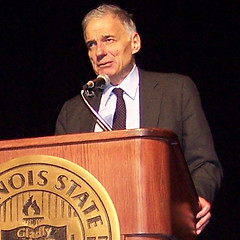
    Ralph Nader at ISU, April 14, 2008Image by guano via Flickr

    The Washington Post says federal regulators plan to announce new rules for the credit card industry.


    FED REGULATORS ARE IN CREDIT CARD INDUSTRY'S POCKET.

    THEY ARE TRYING TO USE BAND AIDS TO FIX ECONOMIC BEHEADINGS.

    THE CREDIT CARD INDUSTRY IS A THREAT TO THE GWOT,

    ID THEFT IS EPIDEMIC AND THE CREDIT CARD COMPANYS ARE MAKING MONEY OFF

    THE CRIME, CHARGES, FEES, INTEREST , AND CHARGES.

    THE CREDIT CARD COMPANIES HAVE INCORPORATED IN STATES WITH OUT ANY CONSUMER FRAUD LAWS.

    AND TERRORIST ARE FINANCING THE WAR WITH ID THEFT PROCEEDS.

    AND THEMSELVES ARE ENGAGING IN CRIMINAL ENTERPRISE WITH USURY CREDIT CARD CHARGES, SOME AS HIGH AS 97%.

    THE CREDIT CARD COMPANYS ARE THE NEW MAFIA. g

    "The proposed regulations, which could be finalized by year's end, would label as "unfair or deceptive" practices that consumers have long complained about," the paper says. "That includes charging interest on debt that has been repaid and assessing late fees when consumers are not given a reasonable amount of time to make a payment. When different interest rates apply to different balances on one card, companies would be prohibited from applying a payment first to the balance with the lowest rate."

    MORE:

    Feds seek to curb 'unfair, deceptive' charges for credit cards, overdrafts

    Federal regulators are moving ahead with new rules to stop "unfair and deceptive" practices involving credit cards and bank overdraft fees.

    The Federal Reserve approved the changes today, a day after the Office of Thrift Supervision and the National Credit Union Administration signed off. As USA TODAY's Kathy Chu explains, the proposal would:

    • Bar issuers from raising interest rates on existing debt, except under certain conditions, such as when a promotional rate expires or when a borrower pays 30 days or more late.
    • Prohibit issuers from calculating one month of finance charges based on two months' worth of activity, a punitive practice called double-cycle billing.
    • Require card issuers to apply monthly payments that exceed the required minimum at least partly to higher-rate card debt. Borrowers often face varying interest rates on credit card debt, for cash advances, balances transferred and purchases.
    • Prevent financial institutions from charging checking-account customers a fee for paying an overdraft — unless the customer has had the chance to opt out of this payment.

    Read the announcement and the full proposal (pdf) issued yesterday by the Office of Thrift Supervision.

    The public will have 75 days to comment, and the regulators expect the rule to be final by the end of the year.

    No immediate comment from the American Bankers Association, though ferocious opposition is likely to come.

    Here's more from the Wall Street Journal, The New York Times, Washington Post, CNNMoney and the Associated Press.

    Keep reading for more specifics.

    Read more...

    Labels: , , , , , , , , , ,