Fusion centers

Photo by Gerald, copyrighted.2008
The Success of the Fusion Strategy in Counterterror Operations
By Douglas Farah
After a few years in the wilderness, the U.S. military and its allies in other parts of the world have honed the cutting edge of a significant series of steps that are yielding highly successful results in combatting non-state armed groups-including terrorists, not just in Iraq but in Colombia and elsewhere.
The Washington Post's recent story on the "fusion cells" gets at the core of the program: The integration and blending of field intelligence (human and signal) with the ability to act rapidly on that information.
The NSA targeted its listening operations, the Treasury Department began tracing anything to do with money and Special Operations Forces, with the help of the latest technology and imaging capabilities, carry out the operations. This website was the first media outlet to discuss the operations of the joint DoD-Treasury "threat finance" cell unit in Baghdad in posts last November 2 and again on November 20, and the first publicly available monograph or study of terrorist financing by the Defense Department was released on October 12 of last year. "Threat finance" units are now operational in each of the military commands.
"To me, it's not just war-fighting now but in the future," Adm. Michael Mullen, chairman of the Joint Chiefs of Staff, told the newspaper. "It's been the synergy, it's been the integration that has had such an impact."
One of the keys has been the ability, over time, to force the sharing of a range of skills in a single unit, so that the traditional segregation and stove pipes have ended. The value of tracing even useless-looking information, particularly from the "pocket litter" of those captured or killed, has proved itself on many occasions. ( Most agencys don't desire public info, the CIA reporting form for example on their web site doesn't even work. G)
While this is integration is a fact at the level of these small task forces, it remains far from accomplished on broad level. ( Our Intel terrorist IPs and evidence has been reported to appropriate agencys, and we track the news to see results, and we preserve an encrypted log on what we have reported to whom. G ) In fact, much of the upper tiers of the intelligence community are just as resistant Gto change and perhaps less inclined to share intelligence than 9-11.
But the success of fusing all elements of intelligence and force to capture often elusive enemies is not just evident in Iraq. In its own way, the Colombian military and policy have been on the cutting edge of the program in combating the FARC. My full blog is here.
September 8, 2008 11:02 AM Link
xxxxxxxxxxxxxxxxxxxxxxxxxxxxxxxxxxxxxxxxxx
US targets Haqqani Network in North Waziristan
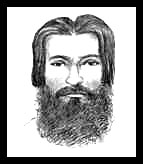 |
| Pictured is a composite image of Siraj Haqqani. These are the guys suspected of harboring Binny G |
Update:
Killed were two wives of Haqqani, his sister-in-law, his oldest sister, two nieces, eight grandchildren and a male relative. A son-in-law of Haqqani was wounded.
Also killed were five al Qaeda operatives, two Azerbaijani and three Arabs: Hamza, Musa and Qasim.
This compound in Danday Darpakhel village is situated in front of the Pakistan Army camp in Miramshah.
xxxxxxxxxxxxxxxxxxxxxxxxxxxx
Haqqani's main madrassa hit in North Waziristan attack
September 9, 2008 12:03 AM ETBy Bill Roggio
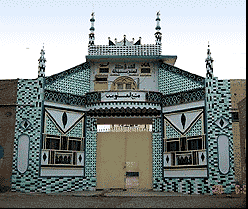 US aircraft struck the Manbaul Ulom, the primary madrassa run by the al Qaeda-linked Haqqani family in order to "send a message." Five Haqqani compounds have been hit in the last ten days.
xxxxxxxxxxxxxxxxxxxxxxxxxxxxxxxx

xxxxxxxxxxxxxxxxxxxxxxxxxxxxxxxx
Our reports one Haqqani clan. G
Gerald
.
![Reblog this post [with Zemanta]](http://img.zemanta.com/reblog_e.png?x-id=8a26c34f-a0f5-423f-9f53-48ab1d396cd1)
Labels: fusion, Siraj Haqqani
posted by gerald at
9/08/2008 12:38:00 PM
1 Comments

 READ MORE
READ OR SUBSCRIBE, Our WAR OSINT on Twitter
Tweet
READ MORE
READ OR SUBSCRIBE, Our WAR OSINT on Twitter
Tweet


